
Quick Guide
- Demand tells you where parking is wanted; bays provide the actual spaces.
- Compare the heatmap and on-map demand labels before spending on land.
- The tutorial identifies the nearby bus stop as reducing some parking demand.
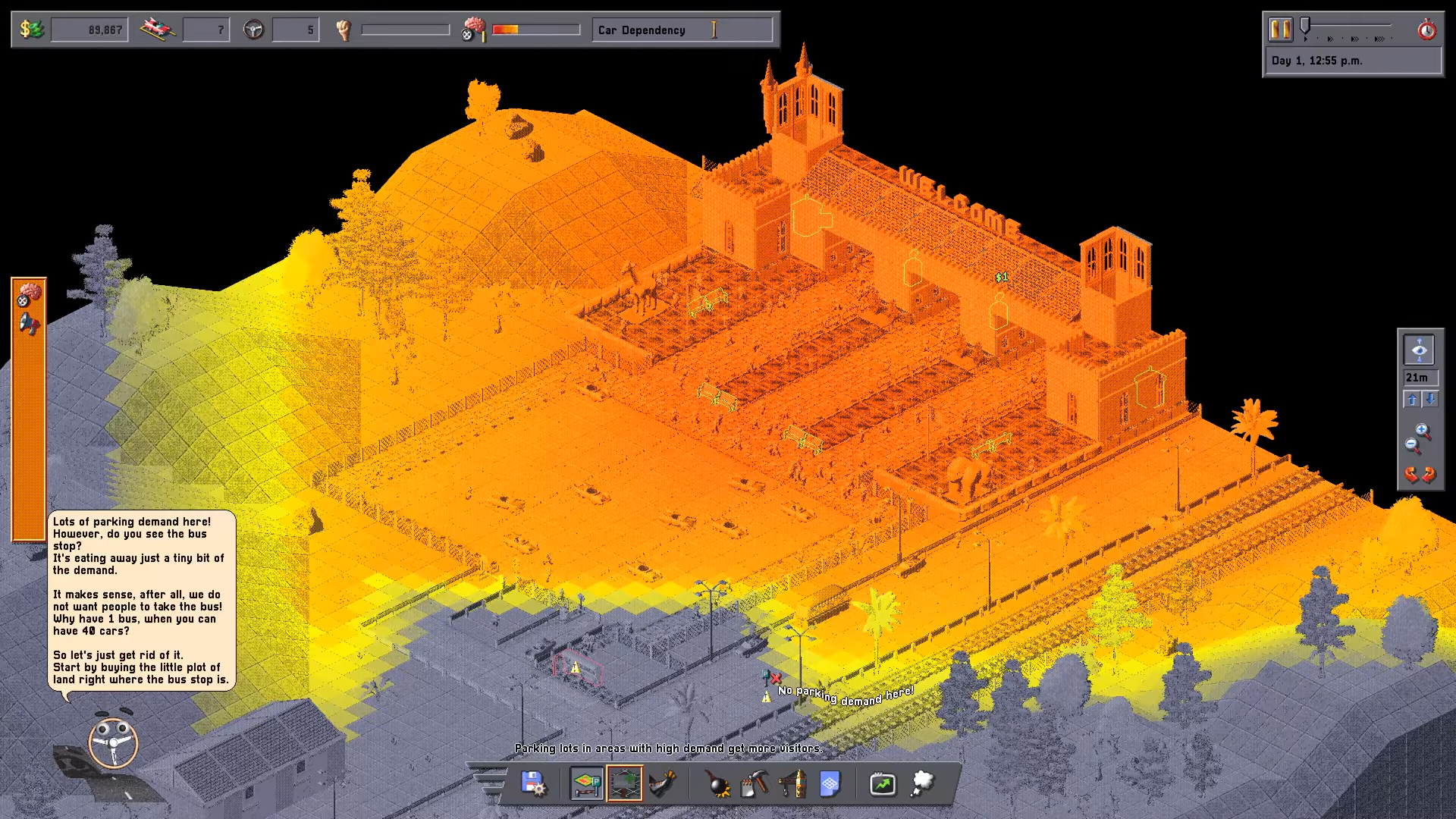
Zoidelle, 05:07. Native 1920×1080 gameplay frame; tutorial footage, exact build unknown.
Zoidelle · Source / open if playback failsUse the Car Park Capital parking demand heatmap in the bottom toolbar before choosing a new lot. Look for locations where people want to park, then check whether cars can reach the spaces.
On this page
Car Park Capital parking demand: read the heatmap
Open Parking Demand Heatmap from the bottom toolbar. The first tutorial asks you to do this after opening the amusement-park lot. Its instructions describe the overlay as showing where people want to park and where lots or multi-floor garages should be built.
The reviewed frame highlights the amusement park and nearby area, while other positions are labelled as having no parking demand. Use those on-map messages with the overlay rather than assuming every empty plot is a good location. The example does not provide a demand-to-profit formula or a fixed distance rule.
Zoidelle tutorial, 04:37–05:47. Published 10 October 2026; exact recording date and build unknown. Open the source if the player is unavailable.
Zoidelle · Source / open if playback failsChoose land before adding more bays
Compare candidate locations while the overlay is open, then inspect the available plot and the approach from the road. Choosing a location with demand and giving cars a usable route solve different problems. Parking Bay orientation and gate direction still matter even in a busy area.
As a spending check, identify the demand area before buying a large plot or ordering a garage. That recommendation follows the tutorial’s placement lesson; it is not a measured ranking of the city’s most profitable land.
What does the nearby bus stop change?
Wheelie says the amusement-park bus stop takes away a small part of parking demand. The mission asks you to buy its land and demolish the stop, while warning that transport plots can be expensive. This explains the tutorial task, but does not quantify the demand increase or guarantee a net income gain.
For another scenario, compare the shown land cost with the parking business you already have. Do not treat the tutorial’s instruction as evidence that every bus or subway station should immediately be removed.
A high-demand location with an empty lot
First separate location demand from access: check the asphalt route, gate directions and unmarked side of the bays. If construction matches the working tutorial example, inspect the fee setting next; the tutorial also warns against excessive prices. These are checks grounded in the demonstrated systems, not a verified universal fix for every empty-lot bug.
Once cars visibly occupy bays, move to Carbrainess and pricing. A bright demand overlay by itself is not a completed parking business.
Sources
Reviewed:
Tutorial footage published 10 October 2026; exact build and recording date unknown
Based on the first tutorial mission, its on-screen instructions and reviewed gameplay frames. Recheck if your tutorial, needs panel or pricing controls differ after an update.